
Services
Immersive & Real-time 3D
Real-time 3D worlds for brands that dare.
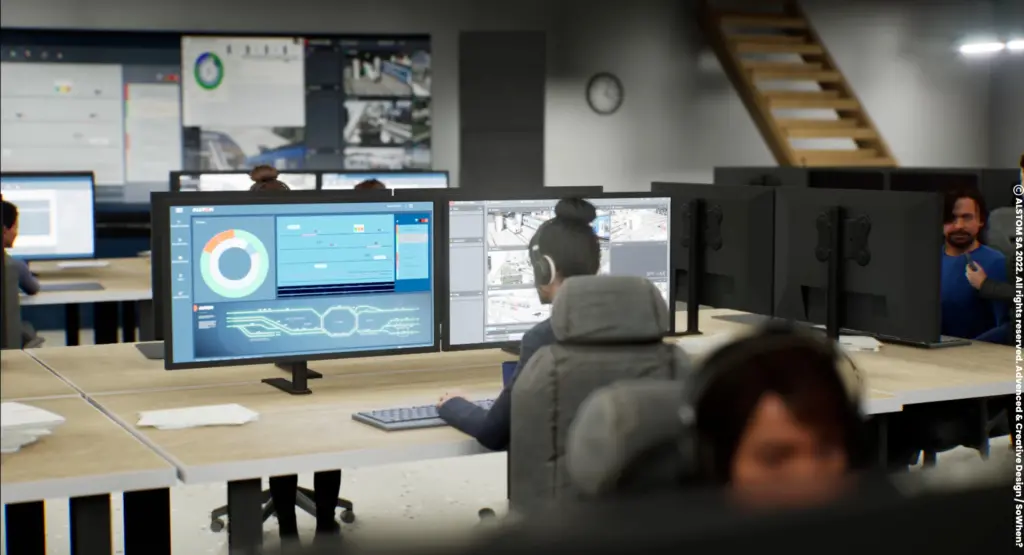
We bring products and stories into real-time 3D — in the browser and beyond. WebGL configurators, virtual showrooms, AR/VR experiences and game-engine production, backed by in-house technical art and a markerless motion-capture studio.
It’s built for marketing, product and innovation teams who need an interactive product demo that does more than spin a model — one that shortens decision cycles, fuels immersive marketing and turns a launch into something people remember. Because our technical art and engineering share one roof, the same senior team carries a project from real-time rendering and 3D web experience through to a production-ready digital twin, where art-meets-engineering is a workflow, not a hand-off. We ship to production and stand behind it on-site.
What we build
- WebGL / Three.js experiences & configurators
- Virtual showrooms & product visualisation
- AR & VR experiences
- Real-time 3D with Unreal Engine & Unity
- MetaHuman characters & markerless motion capture
- 3D asset creation & optimisation
In production for
Valeo (phygital showroom) · One Day Samurai · Alstom (virtual universe)
Frequently asked
- What is real-time 3D, and how is it different from pre-rendered 3D?
- Real-time 3D renders every frame live as the user interacts, so they can rotate a product, walk through a space or change a configuration and see the result instantly. Pre-rendered 3D is computed in advance and played back as fixed images or video — it can look highly polished, but it cannot respond to the viewer. We build real-time 3D experiences with game engines and WebGL precisely because interactivity is the whole point.
- Do you build 3D product configurators and virtual showrooms that run in the browser?
- Yes. As a WebGL and interactive 3D agency, we build browser-based 3D product configurators and virtual showrooms with Three.js, so customers can explore, customise and visualise products with no app to install. We have delivered work in this space, including a phygital showroom for Valeo and a virtual universe for Alstom, always pairing real-time 3D with the brand’s own assets. Everything is built to run on standard devices, from desktop to mobile.
- Can you build AR and VR experiences, or are you limited to WebGL?
- We work across the full real-time 3D spectrum, not just WebGL. Beyond browser experiences, we produce AR and VR with game engines such as Unreal Engine and Unity, create MetaHuman characters, and capture performances in our in-house markerless motion-capture studio. The right platform depends on your audience and your goals, so we recommend the one that fits rather than the one that happens to be trendy.
- How do you keep browser 3D performance smooth on phones and lower-end devices?
- Browser 3D performance comes from disciplined asset work, not luck. Our in-house technical art team optimises every 3D asset — reducing polygon counts, baking detail into textures and managing draw calls — so a real-time 3D experience stays fluid on phones as well as desktops. We test on real devices throughout production and tune the level of detail to the hardware your audience actually uses.
- What do you need from us to start a real-time 3D project, and how long does it take?
- The most useful things to start with are your goal, your target platform and any existing assets — CAD files, product 3D, brand guidelines or reference images. If you don’t have clean 3D assets, our team can create and optimise them from scratch. Timeline depends on scope: a focused WebGL configurator can take a few weeks, while a full virtual showroom or AR/VR experience takes longer. We scope timing and budget with you up front, before any production begins.